Posts

Image
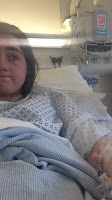
Problems we faced: personal issues: On the 10 th of March I was diagnosed with Type 1 diabetes an autoimmune disease when the pancreas stops producing the hormone insulin.   There is no prevention for type 1 as its purely genetic, regardless of your diet or lifestyle. After spending some time in hospital and returning to college at the being of rehearsals for animal farm I realised the challenge I had ahead of me. Previously during shows I could perform without having to worry about anything other than my acting, however now I have to constantly check my blood sugar level in case they drop below 3.5mol ( hypo). Exercise and depending on what I eat can affect my blood sugar, and with animal farm being so physically demanding I had to be incredibly carful during the show. Having a hypo is incredibly dangerous if left untreated, I begin to shake uncontrollably forget what I’m doing and in severe cases there a possibly of going unconcise. To prevent this from happening I’m cons...
Image
Characters The three main pigs. Snowball: played by Ruth Jones: Most similar to Old Major by adopting many of his ideals compared to Napoleon and Squealer. The "thinker" of the rebellion, Snowball shows a great understanding of strategy during the Battle of the Cowshed, and while some of his initial ideas may fail, it’s clear that he wants to better the animals' lives unlike Napoleon and squealer who want absolute control. . His plan for the windmill is similarly noble, since its construction would give the animals more leisure time. Out of all three pigs Snowball is defiantly the lesser of two evils, though he is most definitely not a ‘good’ character he is the least corrupt and his main downfall is being not realistic enough. Also he is so focused on his ideas he fails to notice how far Napoleon is willing to go to have power over the farm. His execution at the hands of Napoleon , however, suggests that force — not good intentions — governs the farm.   ...
Image
Conditions during the Russian revolution and World War One. .Over three-quarters of the Russian population were unhappy with their position in the Empire. .Peasants and workers alike suffered horrendous living and working conditions and hence posed a threat to the Tsar’s regime. .Russia had no form of income tax. The Tsar taxed the produce of the peasant farmers to raise money to maintain his executive lifestyle. The burden of taxation was so great that riots would regularly break out amongst peasants. Famine was a common occurrence at the turn of the century. There was widespread famine in 1901     .The Russian famine of 1891-92 affected an area of around 900,000 square miles in the Volga and central agricultural areas. Ironically, these were once the most fertile and productive parts of Russia.. It affected between fourteen to twenty million people, of which 375,000 to 400,000 died, mostly of disease. Due to malnutrition caused by the famine, people were mo...
Image
The Russian revolution: Timeline 1860s–1890s 3 March (19 February) 1861 Tsar Alexander II passes the Emancipation Edict, ending serfdom in Russia (but keeps peasants tied to the land through continuing labour obligations). 17 (5) February 1880 Failed attempt (no. 5) to assassinate Tsar Alexander II by blowing up his palace dining room kills 11 and wounds 56. The Tsar survives through being late to dinner. 13 (1) March 1881   Tsar Alexander II is assassinated by a member of the radical group People’s Will. He is succeeded by his son, Alexander III, who enacts anti-terrorism measures that curb civil rights and freedom of the press. 1882 Pogroms against Jews spread across the Russian Empire, leading to mass emigration of the Jewish population. 1891–1892 Famine in Russia kills between 375,000 and 400,000 and affects millions more. 1 November (20 October) 1894     Tsar Alexander III dies after a sudden illness; his son Nicholas (Nicholas II) ...